



Running complex artificial intelligence models right on your desktop without monthly cloud fees is getting closer to reality. When I first looked at the latest hardware announcements, I wanted to see how local execution could finally match cloud power. At its recent hardware conference, Xiaomi presented an engineering prototype called the Xiaomi AI Cube, powered by custom XRING chips (XRING O3, XRING O100, and XRING D100) for local LLM desktop supercomputing. Designed to handle massive 120-billion parameter models locally, this compact system offers a fresh look at desktop computing performance. If you want to explore broader development automation strategies alongside local hardware, you can read more about building autonomous systems in this guide on AI agents, automations, and agentic AI.
Can a desktop workstation really replace cloud servers for heavy tasks? What does this mean for developers looking for private local execution?
According to initial reports from Gizmochina, the system splits tasks across three chips to maintain 150W of continuous power. This post outlines how the hardware works, key performance metrics, and how it compares against competing workstations.
Inside the Unibody Design and Power Setup
The physical chassis uses aerospace-grade aluminum crafted with precision CNC cutouts to optimize thermal airflow. Sustaining 150W of continuous power helps prevent performance drops during extended local inference runs.
How does the cooling design keep high power output stable in a small box? Will thermal throttling affect long reasoning sessions?
Details covered by Notebookcheck confirm the unibody shell balances active cooling and airflow without requiring massive desktop tower dimensions.
When you run long context prompts on standard hardware, heat buildup usually forces the CPU and GPU to throttle speeds. The AI Cube's custom thermal design addresses this issue directly, allowing sustained multi-threaded reasoning.
Architecture of the Triple Custom Chip Array
The prototype relies on three distinct silicon designs working together. The XRING O3 mobile processor manages system tasks and runs smaller models. Meanwhile, the XRING O100 acts as a dedicated accelerator with 3D wafer stacking, and the 3nm XRING D100 handles heavy local parameter workloads.
Why put three different chips inside one desktop mini PC? How do these components divide the workload effectively?
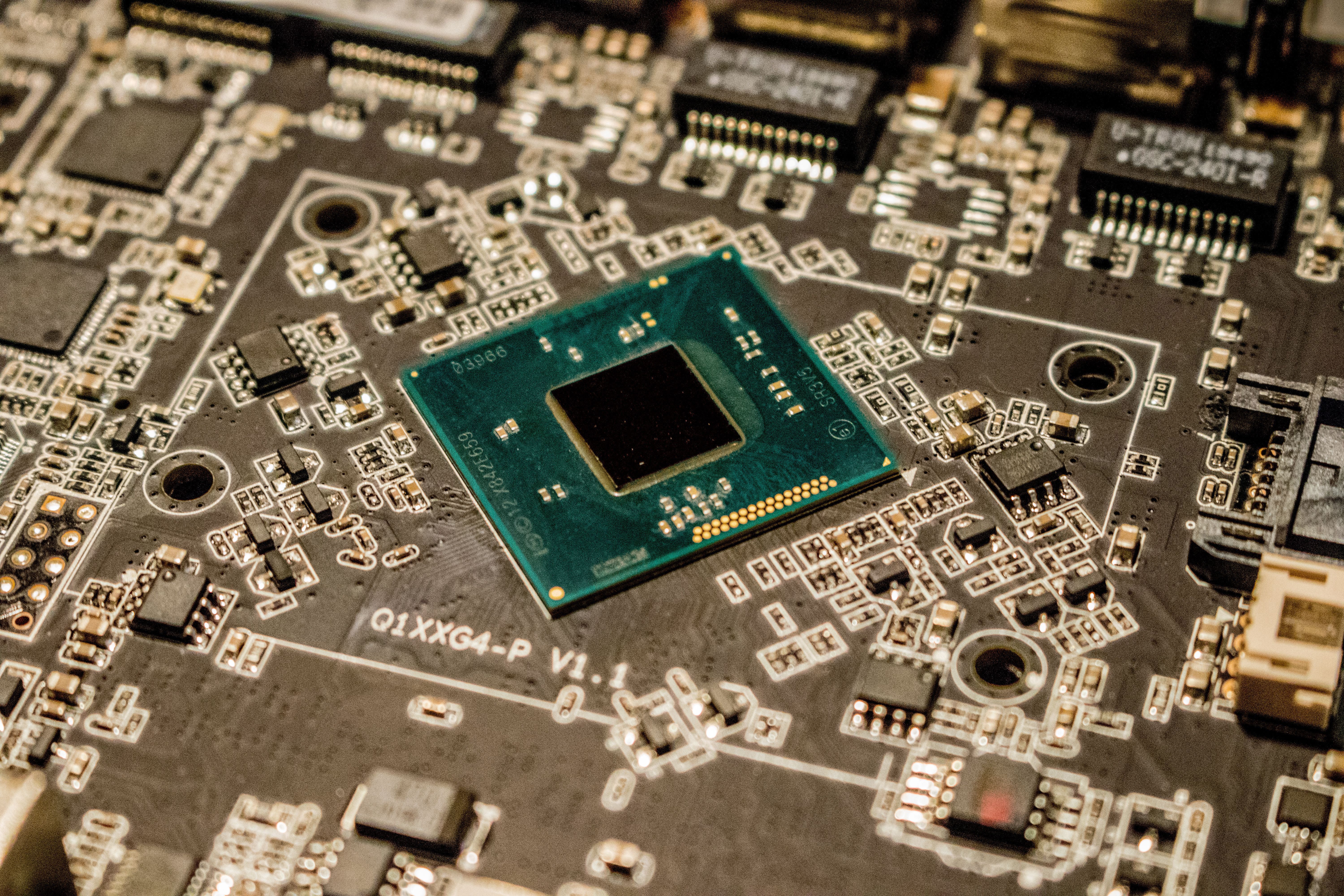
- XRING O3: Manages general system operations and lightweight background models.
- XRING O100: Acts as a dedicated AI accelerator with 3D wafer stacking.
- XRING D100: Handles heavy local parameter workloads using a 3nm manufacturing node.
As detailed in reporting from CnEVPost, the 3nm D100 includes 160 GB of unified memory to support large model execution without hitting traditional memory ceilings.
Solving Memory Bandwidth Bottlenecks for Local Inference
Token generation speed during model inference relies heavily on memory bandwidth rather than raw processing power alone. The XRING O100 accelerator achieves up to 1.22 TB/s near-memory bandwidth by using 28,672 direct data lines and 3D wafer stacking.
How noticeable is a bandwidth jump when generating long text output locally? Does near-memory computing eliminate traditional system bottlenecks?
Coverage from Guru3D highlights that pairing this stack with LPDDR6 memory allows fast token generation for 120B parameter models.
When you wait for local models to generate responses, slow memory transfer is usually the primary bottleneck. By shifting to near-memory computing architectures, hardware designers can feed data directly to processing cores without choking the memory bus.
Comparing Desktop Hardware Options and Benchmarks
When placed alongside existing workstations like the Nvidia DGX Spark, Apple Mac Studio, and AMD Strix Halo systems, the prototype offers distinct memory bandwidth specs. The AI Cube delivers significant memory bandwidth improvements over competing 128 GB setups while maintaining 160 GB of unified memory capacity.
Is higher memory bandwidth worth waiting for custom silicon releases? How will pricing compare once commercial units ship?
Here is how the hardware specifications compare across popular desktop and workstation options:
- Xiaomi AI Cube: Features 160 GB unified memory, triple XRING architecture, and up to 1.22 TB/s near-memory bandwidth.
- Nvidia DGX Spark: Features 128 GB unified memory with standard enterprise workstation memory bandwidth configurations.
- Apple Mac Studio: Features high-bandwidth unified memory optimized for macOS machine learning toolchains.
- AMD Strix Halo: Features integrated high-performance memory controllers tailored for advanced APU workloads.
Analysis of Xiaomi AI Cube specs shows that the hardware aims to make desktop execution far more accessible.
Software Ecosystem Readiness and Launch Timelines
Hardware strength is only half the equation when running local models. Coordinating model execution across three separate chips requires software support that matches open tools like llama.cpp and vLLM.
Will existing open-source frameworks work seamlessly with this multi-chip setup? When can buyers expect retail availability?

Commercial rollouts for the XRING O100 and D100 chips are planned for 2027, as reported by CnEVPost, meaning software developer tools will continue refining before full production. If you are building workflows around local model execution, keeping an eye on these developer timelines will help you plan your future infrastructure upgrades.
Follow Owais Abdullah on Google Search & Discover
Add this domain as a preferred source to see new AI engineering, Next.js SaaS, and Digital FTE breakdowns prioritized in your Google Top Stories, AI Overviews, and Discover feed.
Architecture FAQs
Was this article helpful?
Your feedback helps improve our future articles and tutorials.
Discussion & Thoughts
Join the conversation with your perspective