


Mastering Foundational Development Skills for Modern Systems
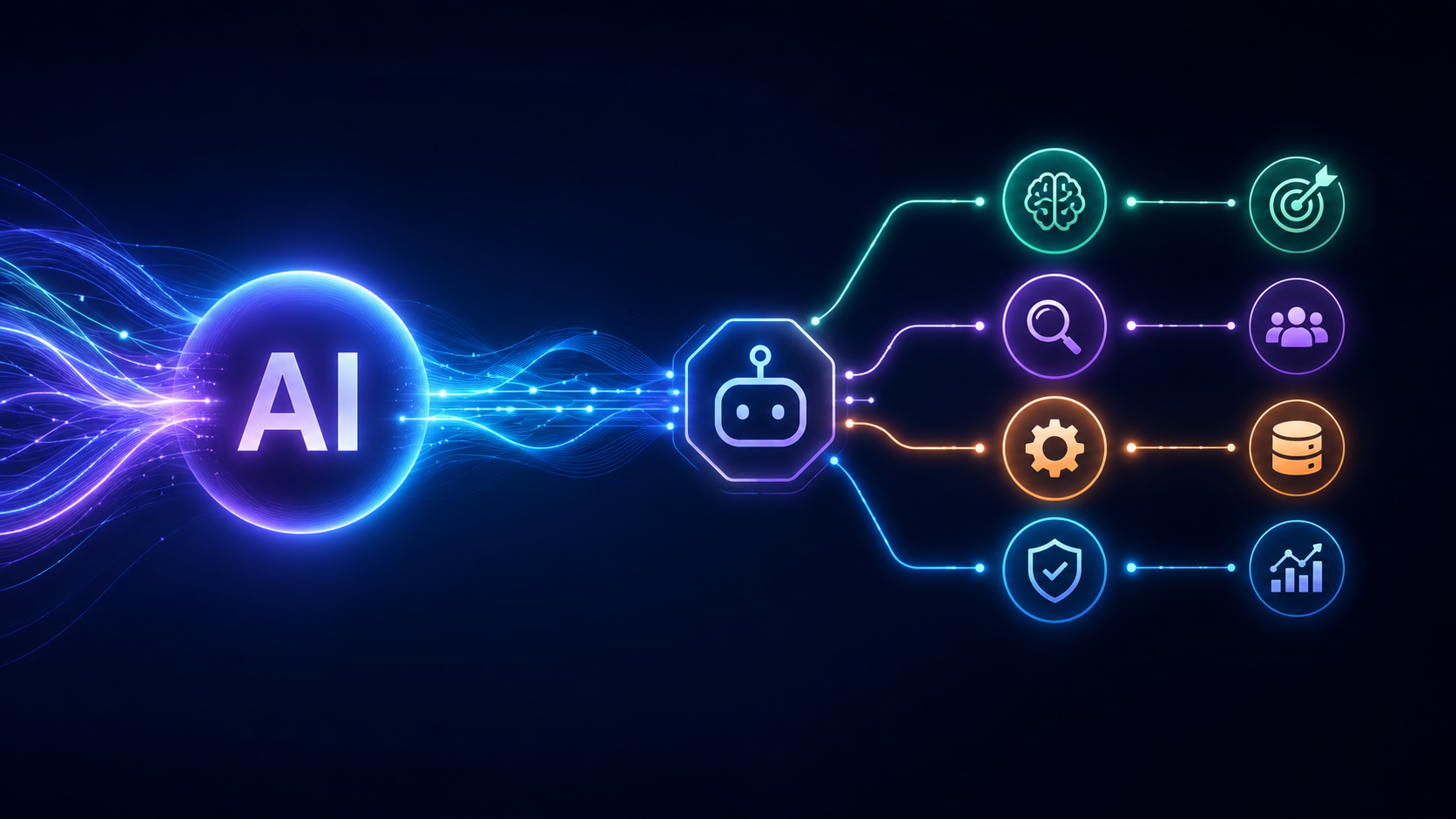
When I started building autonomous systems, I quickly realized that jumping straight into complex frameworks leads to brittle code. Robust AI agent architecture begins with mastering core programming primitives and asynchronous data flows. You need to handle API calls efficiently, manage environment variables securely, and build clean backend scripts using Python and FastAPI. Without this solid foundation, scaling up to complex orchestration workflows creates applications that break under production loads.
Are you comfortable writing asynchronous Python code to handle multiple API requests concurrently? Do you know how to securely manage API keys and environment configurations in production?
For a deeper look at backend foundations, check out the Python Documentation and explore FastAPI Guides.

Understanding the Core Agent Loop and Primitives
An agent is essentially an LLM wrapped in a loop with tools, context, and state management. When I write custom agent loops, I focus on sending messages, executing tool calls, appending results, and repeating until completion. You should understand how tool calling differs from standard text generation and why capping step limits prevents infinite cost loops.
Can you write a basic agent loop from scratch without relying on heavy frameworks? What mechanisms do you use to cap execution steps and prevent runaway API charges?
Review the official OpenAI API Reference and Anthropic API Docs to understand tool-calling parameters.
Implementing Advanced Memory and Context Engineering
Managing state across multiple turns and long-running sessions separates toy projects from production apps. In my experience, you need to implement conversation memory, persistent file storage, and vector databases like pgvector for semantic recall. Context engineering ensures your models receive relevant context without overwhelming token limits.
How do you decide when to transition from simple in-context memory to a persistent vector database? What strategies do you use to compress long conversation histories?
Explore advanced storage patterns with PostgreSQL and pgvector and learn about stateful handling via LangGraph Docs.
Orchestrating Multi-Agent Teams and Collaboration
Monolithic agents juggling dozens of tools often fail due to context pollution and poor tool selection. Transitioning to multi-agent architectures lets you split tasks among specialized roles like research, writing, and validation. Frameworks such as CrewAI and LangGraph help coordinate these workflows effectively.
When should you split a monolithic agent into a multi-agent crew with specialized roles? How do you manage error propagation when one agent in a sequence fails?
Compare orchestration patterns using the CrewAI Documentation and AutoGen Framework Guide.
Integrating Model Context Protocol for Standardized Tools
Connecting diverse tools and external data sources often leads to messy, custom codebases. The Model Context Protocol provides a standardized interface for agents to discover and authenticate tools seamlessly. Adopting MCP standardizes tool servers and allows your agents to interact securely with file systems, databases, and APIs.
How does standardizing tool interfaces through MCP reduce integration overhead across different LLM providers? What security boundaries do you enforce when connecting external tool servers?
Learn more about standardized tool integrations by reviewing the Model Context Protocol Specification.
Building Robust Evaluation and Reliability Engineering
Deploying agents into production requires rigorous guardrails, output validation, and continuous evaluation to separate lucky runs from systemic improvements. Implementing structured logging, tracing, and automated test harnesses ensures your system behaves consistently under real-world conditions.
How do you measure whether a prompt or model upgrade actually improves system reliability? What guardrails do you put in place to prevent hallucinations in regulated workflows?
Discover testing and observability strategies with LangSmith Tracing and DeepEval Framework.

Follow Owais Abdullah on Google Search & Discover
Add this domain as a preferred source to see new AI engineering, Next.js SaaS, and Digital FTE breakdowns prioritized in your Google Top Stories, AI Overviews, and Discover feed.
Architecture FAQs
Was this article helpful?
Your feedback helps improve our future articles and tutorials.
Discussion & Thoughts
Join the conversation with your perspective